
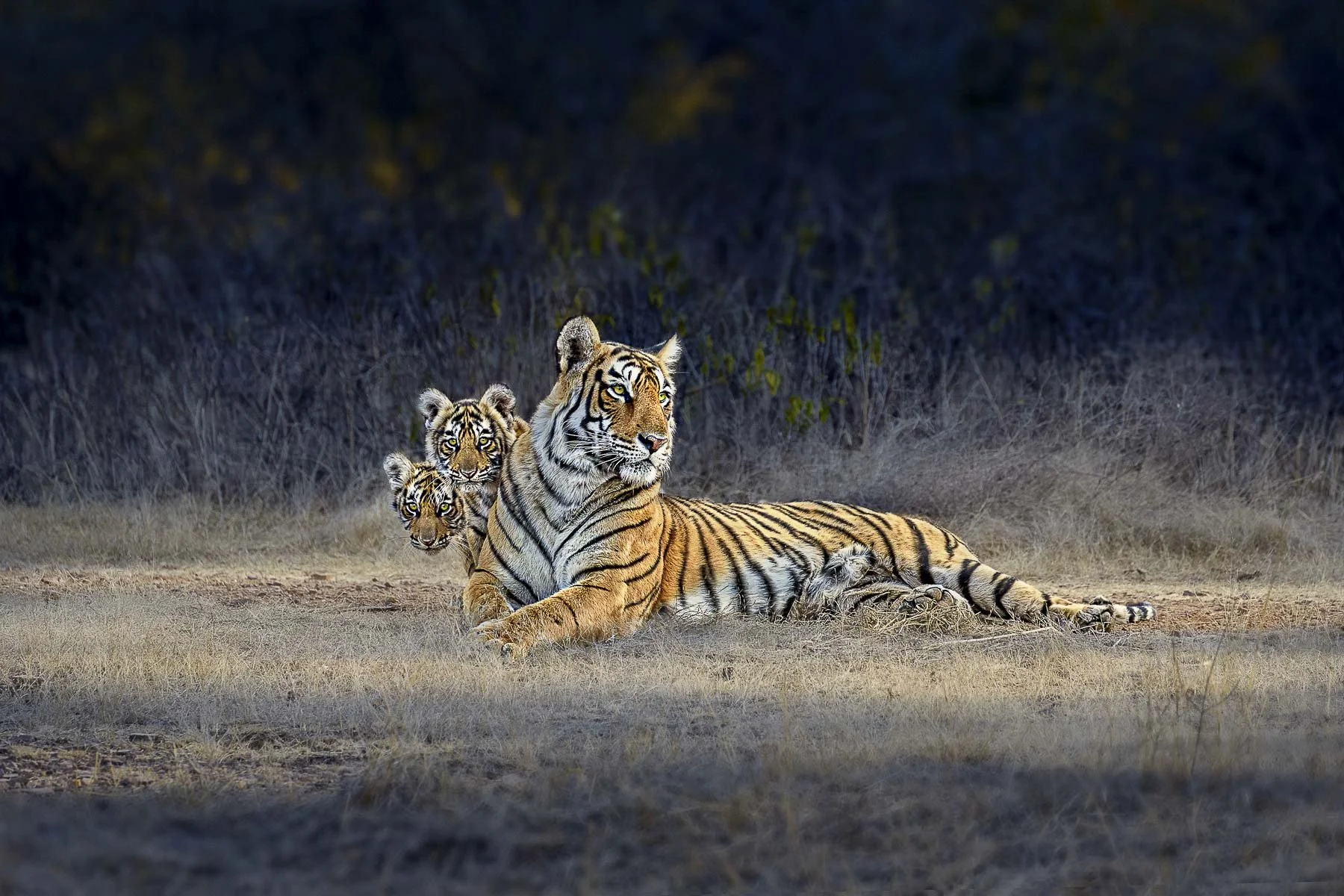
Arrowhead made us wait. Then she let us meet her cubs.
Arrowhead walked into a Ranthambore clearing alone, checked it, and lay down in front of our vehicle. Only when she was sure did her cubs come out. John Wiseman on the afternoon India’s best-known tigress trusted strangers with her children.
Field Notes · Ranthambore, India
Arrowhead made us wait. Then she let us meet her cubs.
In March 2019, India's best-known tigress walked into a clearing, checked it, and lay down in front of our vehicle. Only when she was sure did her cubs come out. A year after her death, I return to the afternoon she trusted a row of strangers with her children.
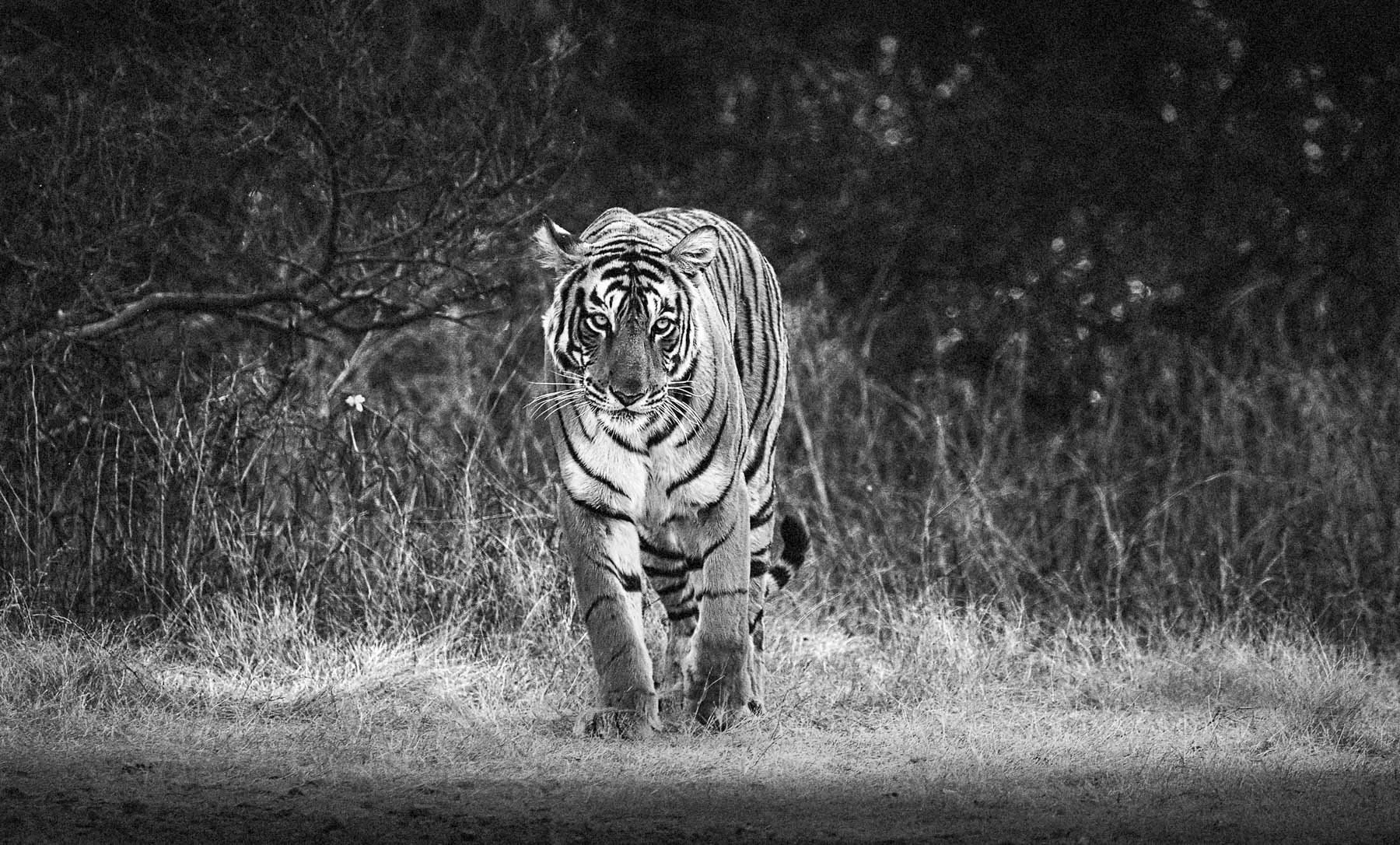
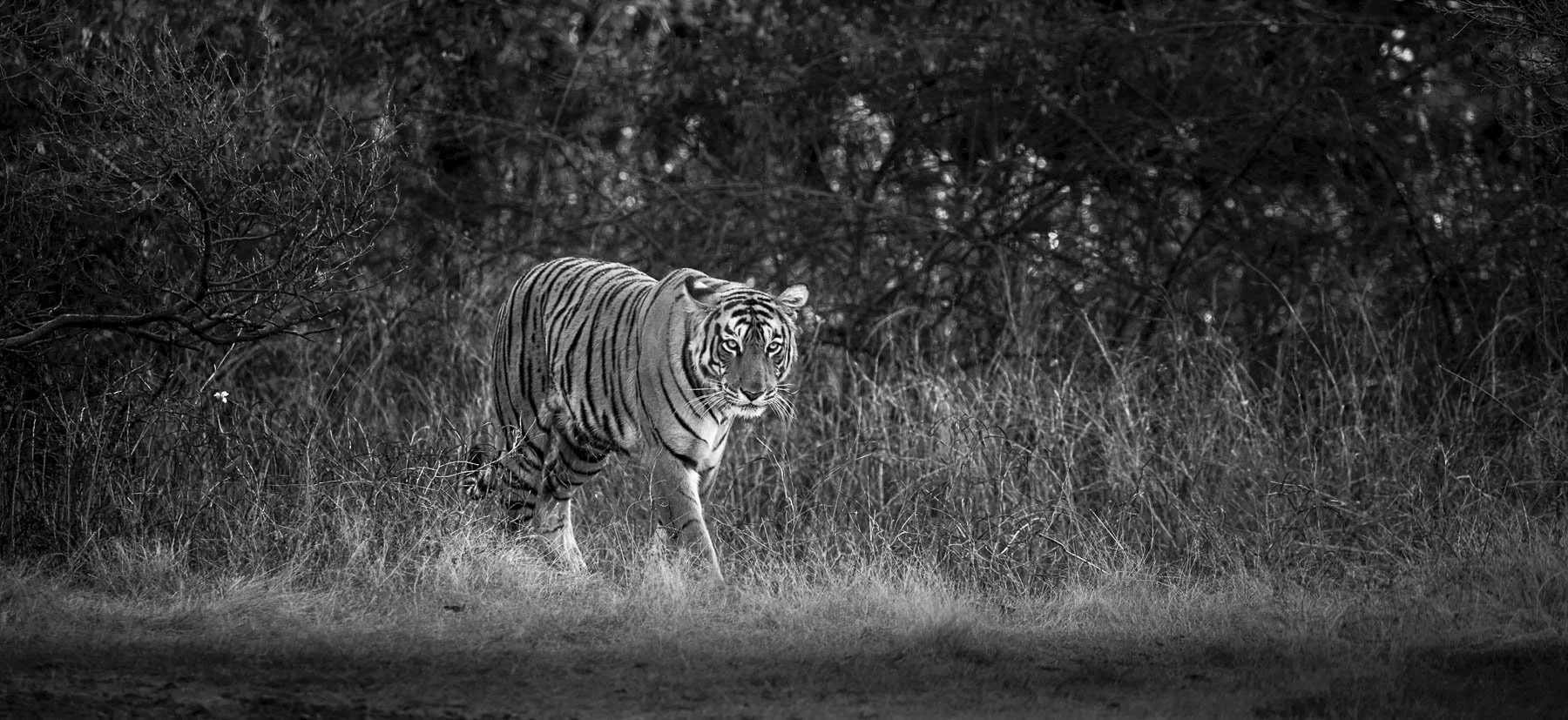
She came out of the forest slowly, and she came alone.
It was March in Ranthambore, the start of the dry season, and the grass in the clearing had bleached to the colour of rope. Against it a tiger is impossible to miss. She knew that. For a moment she stood half inside the scrub with her head low, reading the open ground in front of her.
Then she stepped out and crossed the clearing, unhurried, watching the vehicles along the track.
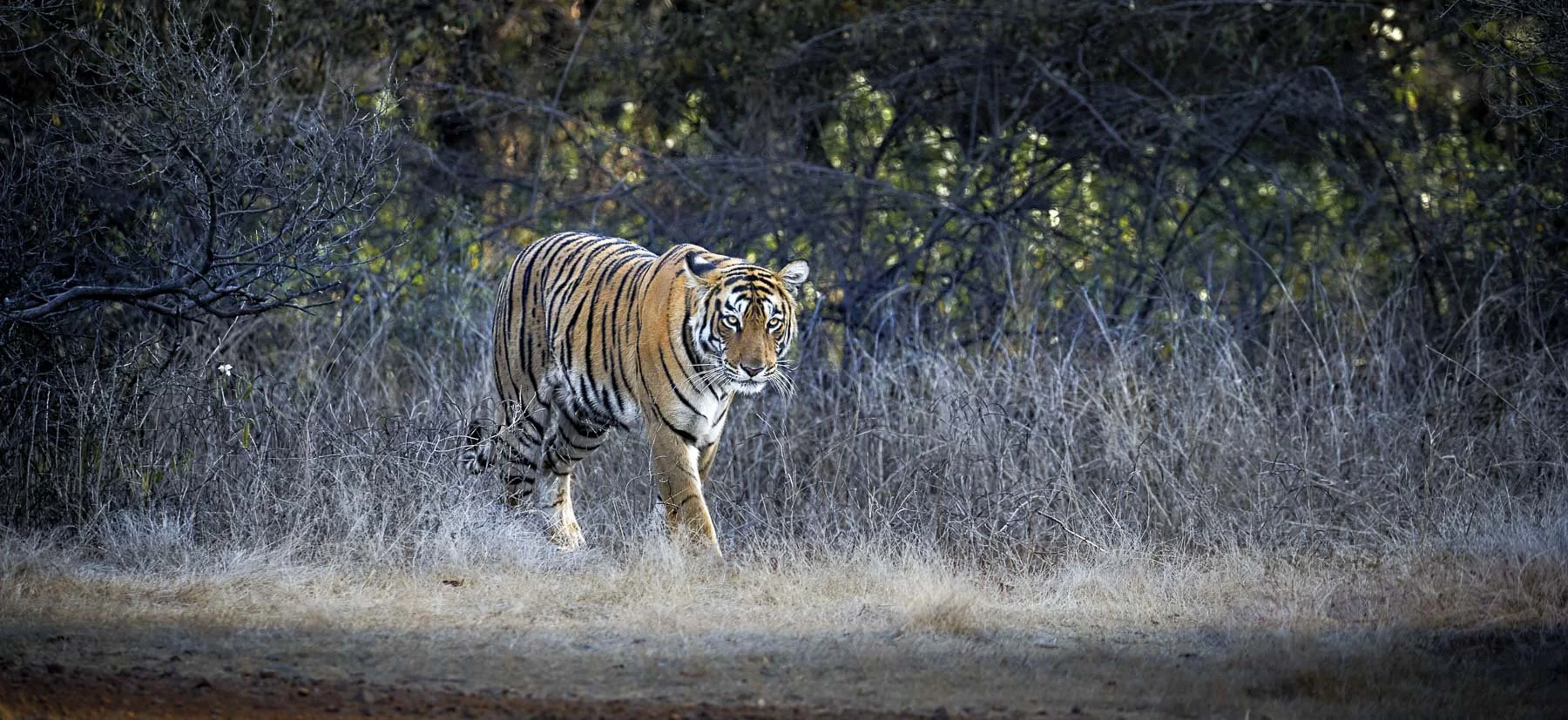
Eight seconds later she turned and walked straight at us.
I have photographed wild animals for twenty-five years, on six continents. You learn to read the animal before you read the light. Everything about her said the same thing. This is happening on my terms.
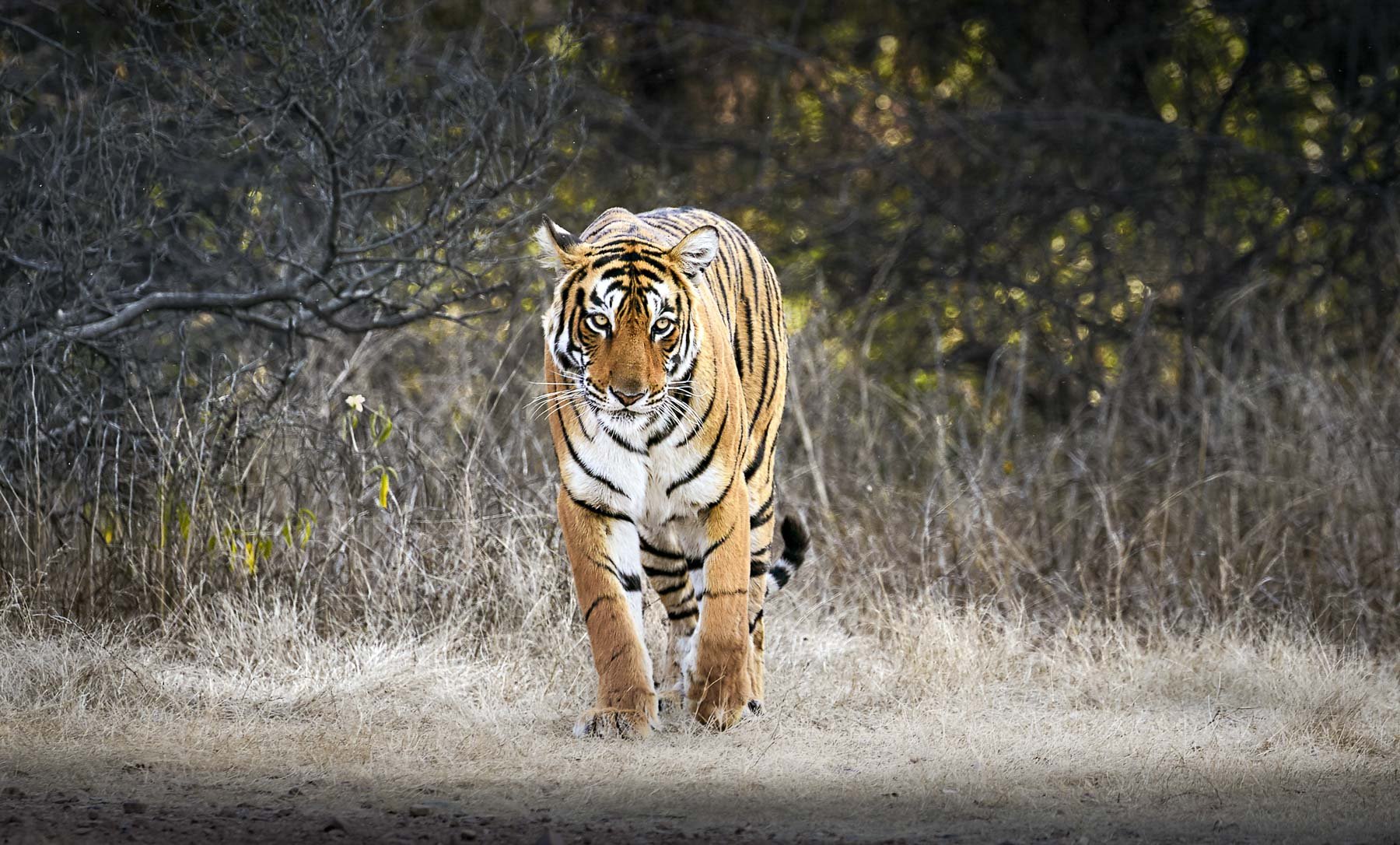
Her name was Arrowhead. She was the granddaughter of Machli, a tigress so famous she had become the face of tiger conservation in India, and by then Arrowhead was among the most photographed wild tigers in the country herself. She held the lakes at the heart of the park, as her grandmother had. She hunted crocodiles, as her grandmother had.1 And somewhere in the scrub behind her, out of sight, were two cubs about three months old.2
Making sure
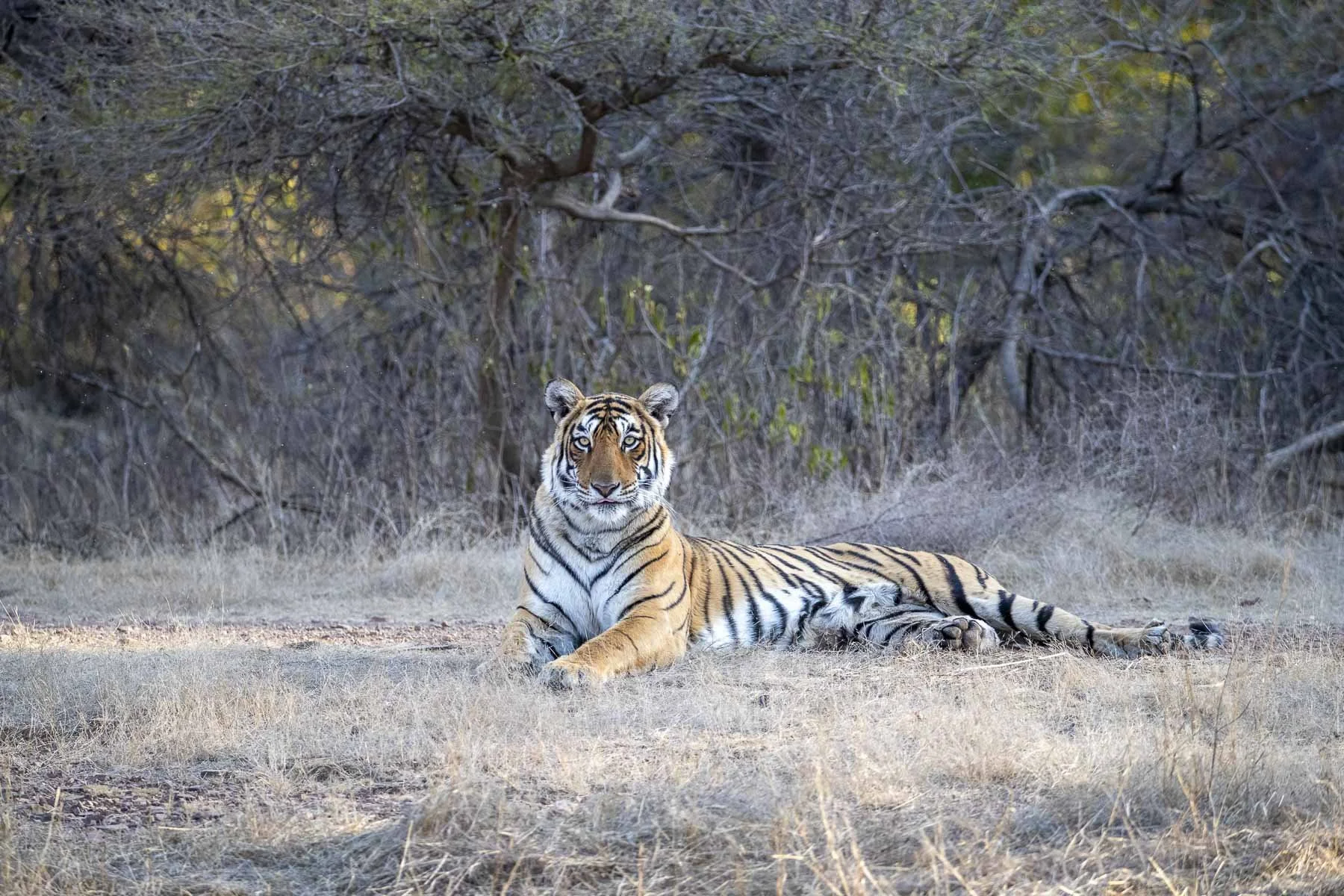
She did not lie down straight away.
Halfway across the clearing she stopped and looked back the way she had come, along the line of the trees. She held that look for a long moment. Then she turned her head and looked at us. Only then did she lower herself onto the grass, and even then her head stayed up.
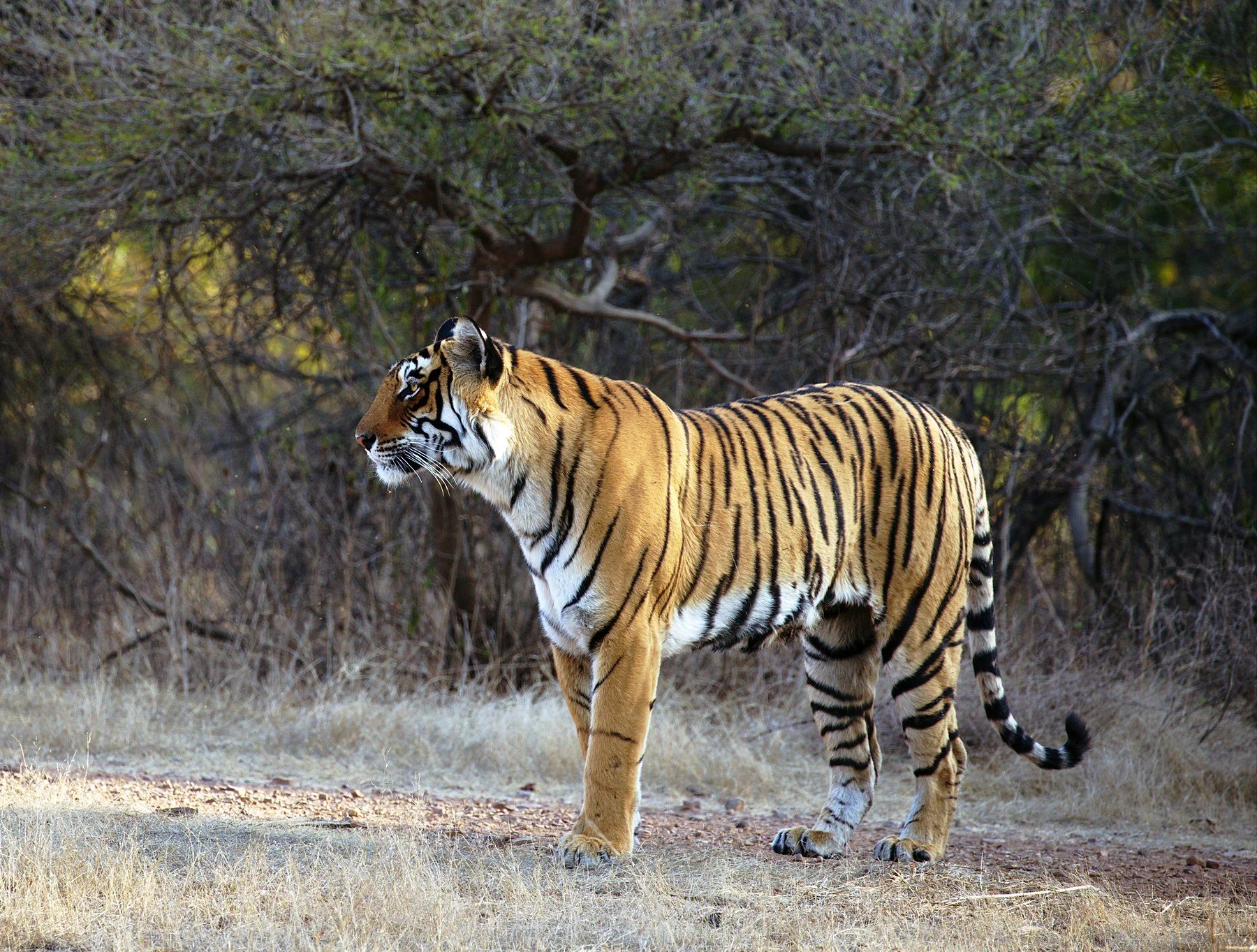
It was careful work, and it had a reason. Male tigers kill cubs that are not their own. In Ranthambore, a study that followed 97 tigers between 2006 and 2014 attributed 41 per cent of cub and juvenile deaths to natural causes, including infanticide and the loss of the mother, and 47 per cent to people.3 A mother with young checks every clearing as though her cubs' lives depend on it, because they do. What looked like calm was work.
And then, slowly, the work was done.
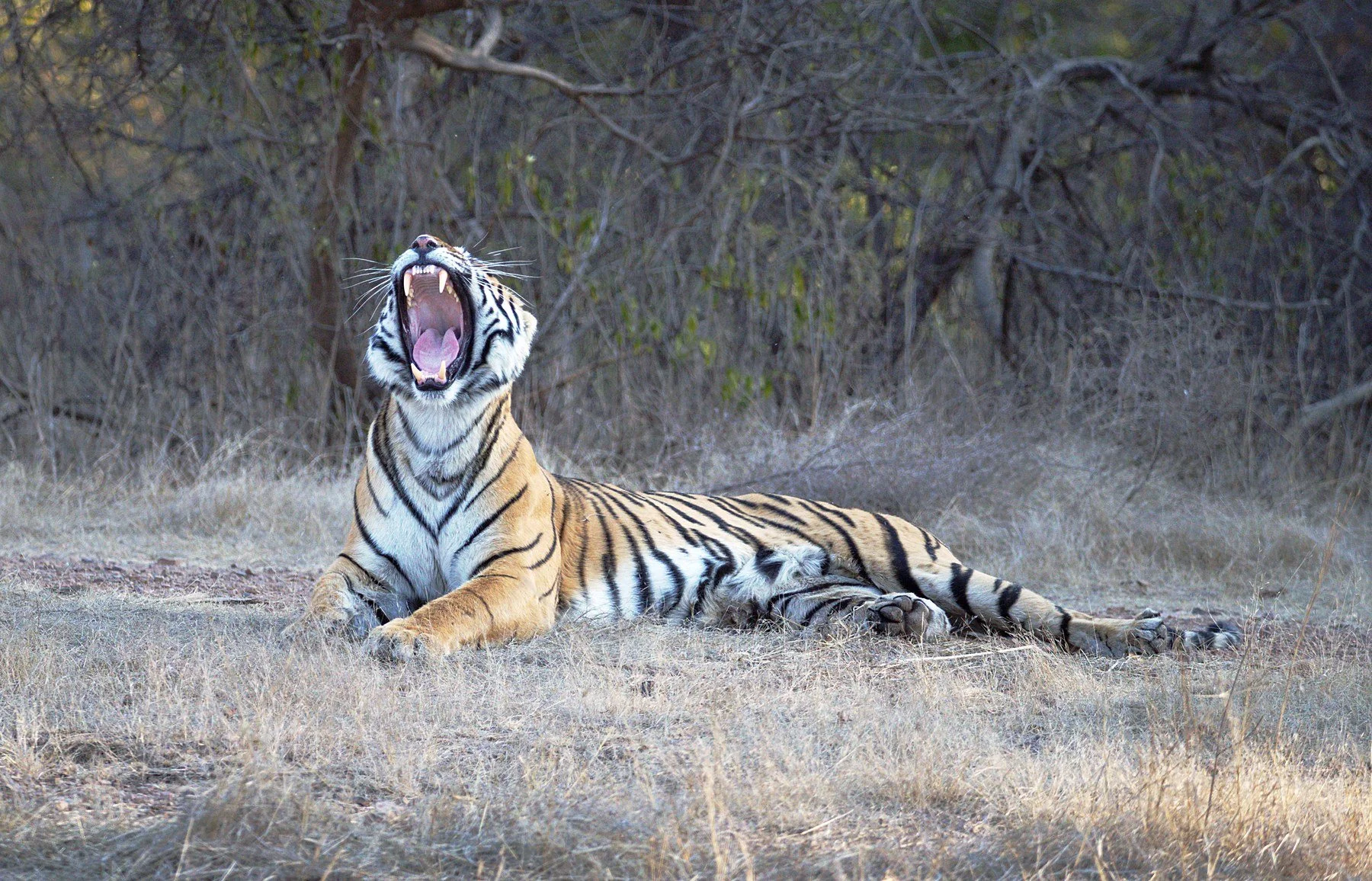
She stretched out along the grass. Her shoulders dropped and her body went loose. A couple of minutes later she yawned, long and slow. Whatever she had been checking for, she had decided it wasn't there.
A few minutes later, the grass behind her began to move.
The introduction
The cubs were very tentative at first. They kept behind Mum, two small faces pressed to her shoulder, peering at the vehicles.
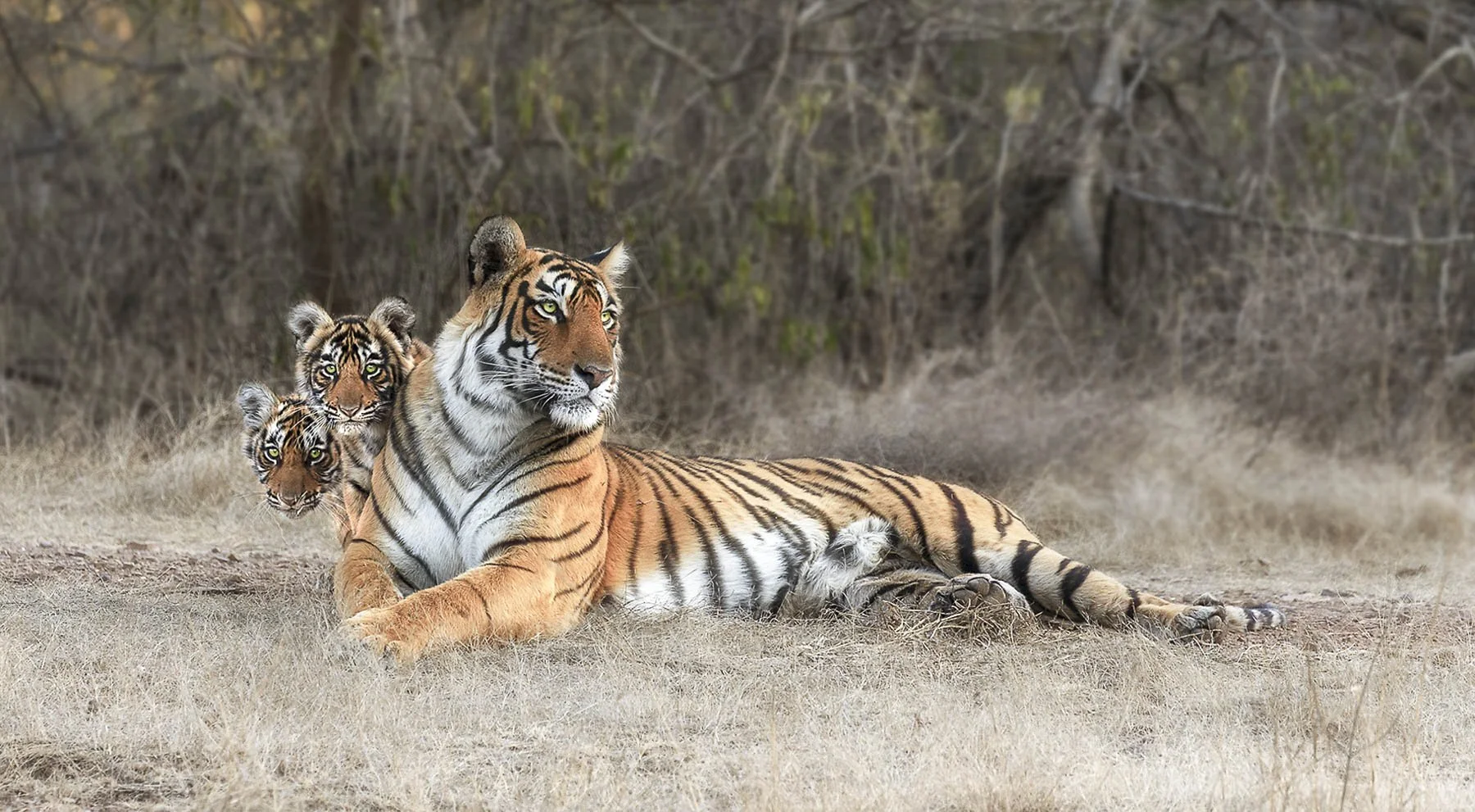
Three months earlier they had been born blind, somewhere in that forest. The park had first recorded them only in January.2 This may have been one of the first times they had seen people this close.
Arrowhead didn't move. She lay exactly as she had before they came out, loose and calm, and let them look.
It was very obvious to all of us what was happening. She was introducing her cubs to humans.
Then, seeing everything was OK, they began to play. They were on her, climbing her shoulders, sprawling across her back, treating the most famous tigress in India like a fallen log. She yawned again and let them.
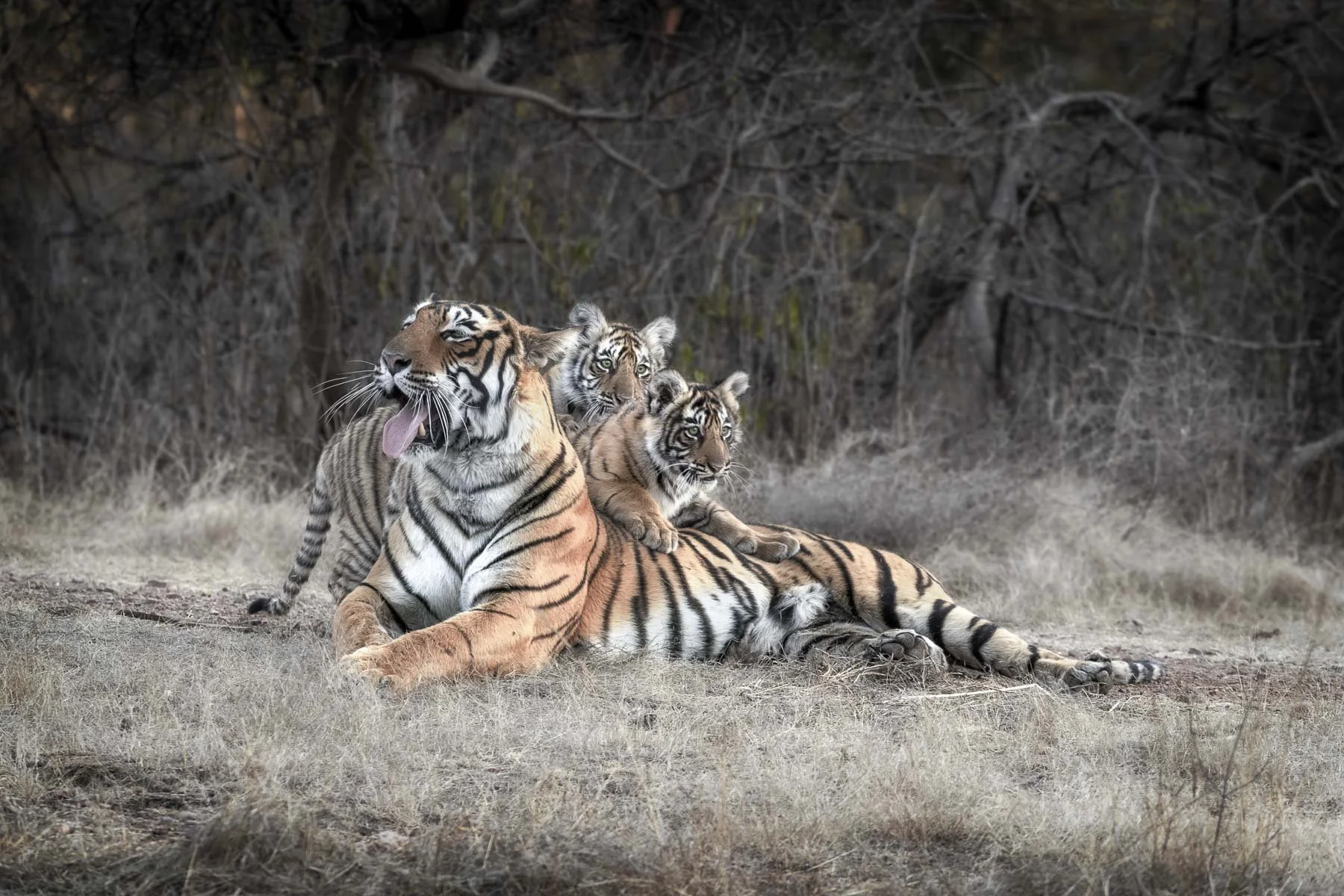
“For those few minutes, it was very special.”
As a photographer, you wait years for a scene like this and rarely get it. A mother and her young, in the open, at ease, in low light, with the forest falling away to dark behind them. To capture Arrowhead with her two cubs was an extraordinary experience.
It didn't last. The cubs were suddenly on their feet at her side, and Arrowhead had turned her head away from us, towards the trees.
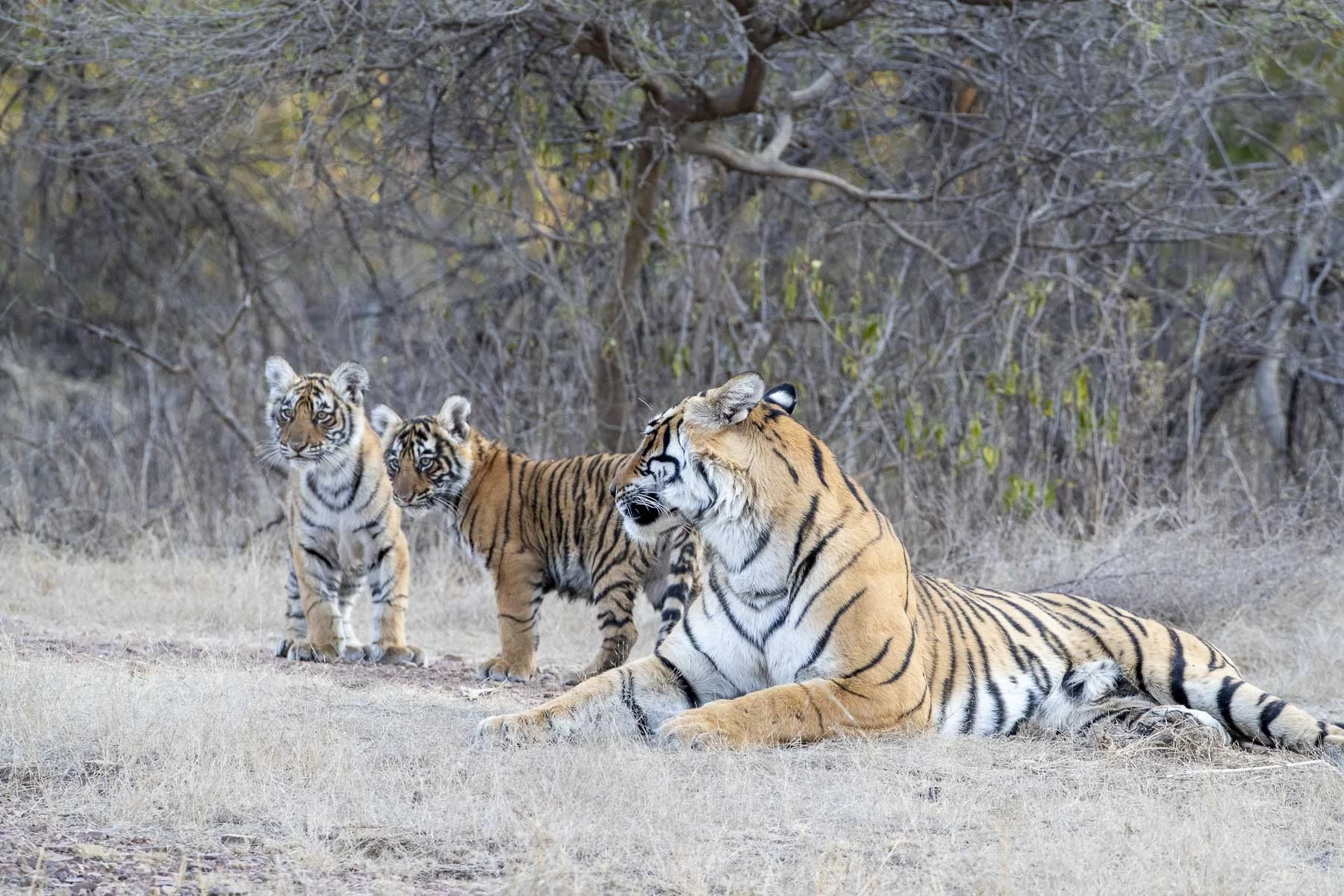
After a very brief encounter, Arrowhead felt the job was complete for that day. She rose and walked back into the forest, and the cubs fell in behind her. Within moments the clearing held nothing but grass.
What she gave us
Arrowhead died on 19 June 2025, near the old lodge at Jogi Mahal, in the lake country she had held for most of her adult life. She was 11. She had been ill for months, and a tumour was reported as the cause. She died, The Times of India reported, only hours after her last cubs had been moved out of the park.5 Her death made national news across India. Across the wildlife world, social media filled with tributes from guides, rangers and photographers who had followed her for years, and from people who had never been to Rajasthan at all.
Most of the tributes remembered her grandeur: Machli's heir, the crocodile hunter, the mother of Riddhi and Siddhi, almost certainly the two cubs in these photographs, who grew into adults and fought over her lakes.1
All of that is true. It isn't how I remember her.
I remember a tigress standing alone in a clearing, looking back at the forest, making sure.
We usually talk about wildlife tourism as something we do to animals. The crowded tracks, the engines, the long lenses. Some of that criticism is fair, and every photographer in those vehicles, me included, is part of it.
But that afternoon felt like the other way round. I can't know what was in her mind. What I saw was a mother check the ground, look at us, and bring her children into the open anyway. Cubs learn what to fear by watching their mother. Ranthambore's tigers can be watched at all because generations of mothers like her have made that same calm judgement. It is a kind of trust, and it is not one we have always earned.
India holds around three-quarters of the world's wild tigers. After tigers vanished from the nearby Sariska Tiger Reserve, animals from Ranthambore were moved there from 2008 to bring them back.4 A tiger that millions of people have seen is hard to lose quietly. The least we owe her kind is to keep watching well.
Two cubs, three months old, pressed against their mother's shoulder. They did not yet know who she was.
By the time she died, much of India did.
John Wiseman is an Australian wildlife photographer. He has spent twenty-five years photographing animals across six continents and is represented by IRID Gallery.
From the field to the finished wall
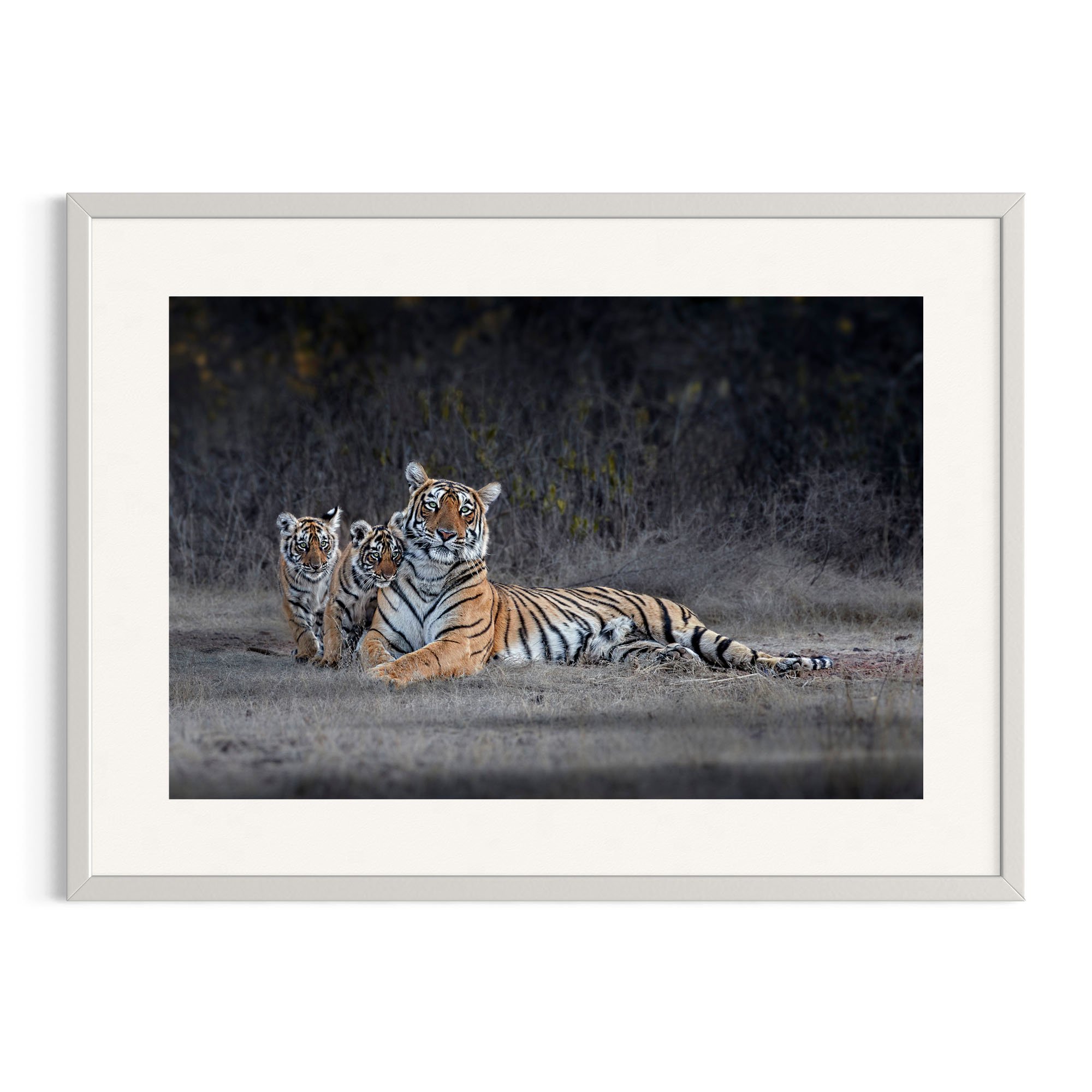
Arrowhead of Ranthambore
The moment her cubs first looked out from behind her, as a signed fine art print. Limited Edition of 30, each numbered and hand-signed with a Certificate of Authenticity, with smaller hand-signed open editions from $175. Unframed, or framed in white, black or Tasmanian oak, made to order in Sydney.
View the printMore Field NotesSources
The encounter is John Wiseman's own account, checked against the frame numbers and capture times in his camera files.
- Tigerwalah, “Arrowhead: The Queen of Ranthambore Waters” — lineage, territory, litters, Riddhi and Siddhi.
- Tigerwalah, Ranthambore sighting log — Arrowhead's cubs first recorded on 2 January 2019.
- BMC Zoology (2017), “Demography of a small, isolated tiger population in a semi-arid region of western India” — cub and juvenile mortality, 2006–2014.
- National Tiger Conservation Authority — reintroduction of Ranthambore tigers to Sariska from 2008.
- The Times of India, 20 June 2025 — Arrowhead's death, age and the relocation of her cubs.